
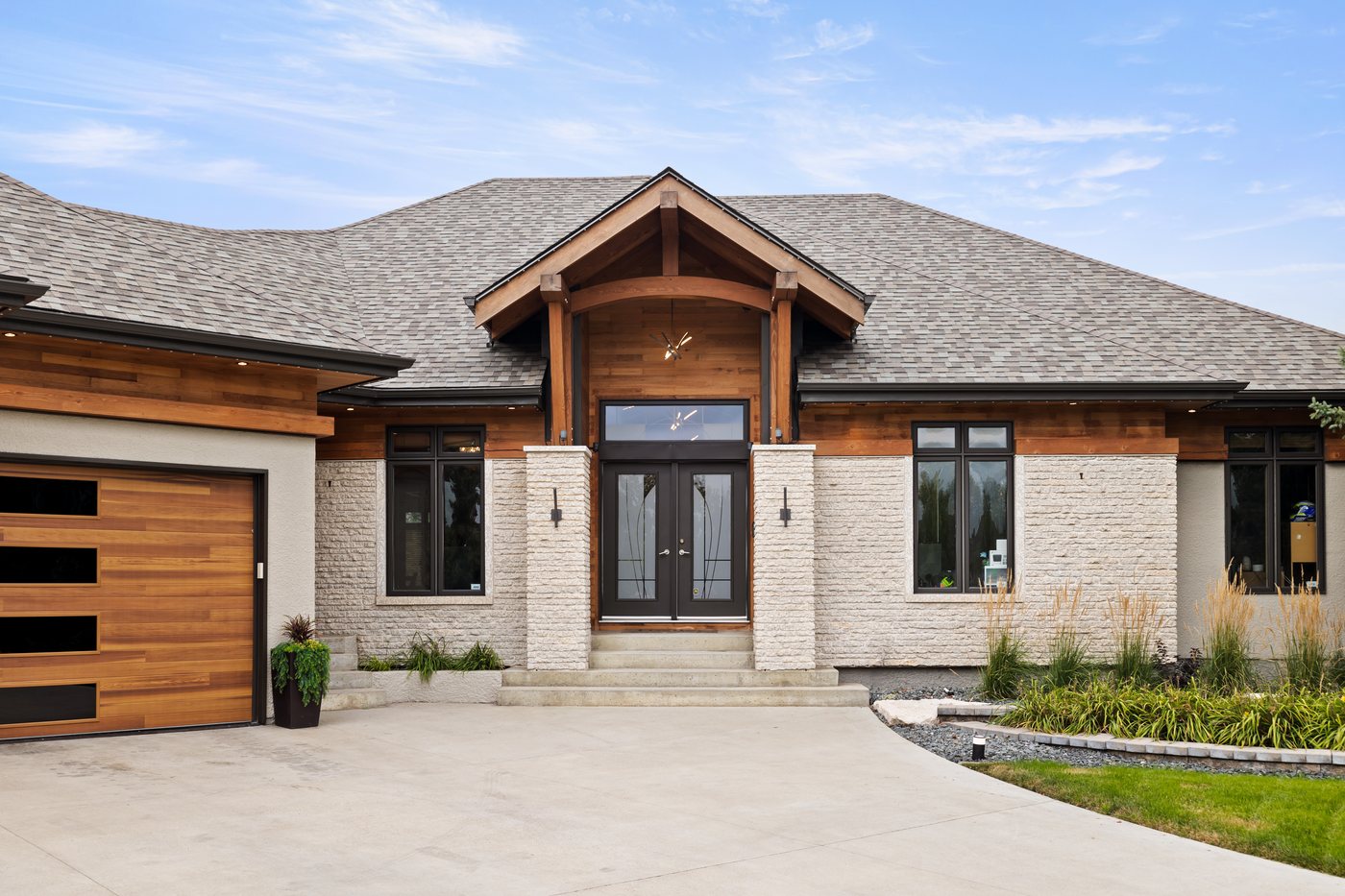
It is worth saying plainly: the building code is a minimum standard. A home built exactly to code is, by definition, the least-good home it is legal to build. That is not a knock on the code, which exists to keep people safe. It is a reminder that meets code and built to last are not the same claim.
Building beyond code is not about spending without reason. It is about putting effort where it changes how long a home stays sound and comfortable, and being honest about where extra spending does not.
The envelope is where it lives
Most of what determines whether a home lasts and stays comfortable happens in the building envelope, the layer that separates inside from out. Three things matter most there.
- Air sealing. Uncontrolled air movement carries moisture into places it should not go, and moisture is what quietly destroys buildings. A genuinely tight envelope is one of the highest-value things you can invest in.
- Water management. Flashing, drainage planes, and the details around windows and roof penetrations decide whether water that reaches the wall finds its way back out. These are unglamorous details that matter for decades.
- Continuous insulation. Insulation that wraps the structure without being interrupted by framing holds temperature better and reduces the cold surfaces where condensation forms.
Materials and detailing
Beyond the envelope, durability comes from choices that rarely show up in a sales brochure: materials suited to the climate, connections and fasteners that will not be the first thing to fail, and care at the transitions where most problems start. A home is only as durable as its weakest detail, and the weak details are almost always at the joints.
The part that saves money
Building past the minimum costs more at the outset. What it buys is a lower cost of ownership: a smaller heating and cooling load, fewer repairs, and a home that does not need major intervention a decade or two in. A home built right the first time is the less expensive home over the years you actually live in it. That is the math worth running, and it is the standard we build to whether or not anyone is checking.